

intro
Isn’t it infuriating when your microwave zaps your food so that the edges set to a lava-like temperature but remains frozen in the center? You’re not alone, and it’s the top complaint about conventional microwaves. For more than eight decades, we have depended on cumbersome 1940s-style transformer technology that hasn’t been substantially altered. These relics don’t “cook” your food; they bombard it with jolts of high-voltage electricity, handing you rubbery chicken and frozen burritos.
But there is an amazing new-fangled option that isn’t failing chefs, and even us homeowners nationally are starting to take note in 2026. Microwave Inverter Technology is the Maverick to your Top Guns, replacing raw power with laser accuracy. In this ultimate guide, we’re going to dive deep into the science on how it’s made, what makes it tick, and why this is one of the best upgrades you’ve ever made for your kitchen.

The Unsatisfying Nature of “Lava Edges and Frozen Centers”
Conventional microwave Inverter in operate on a “pulsing” principle. As the internal transformer operates only at full power, they need to go completely ON and OFF to achieve lower heat. That creates “hot spots” where the outside of your food burns but its inside remains raw or frozen. This isn’t only annoying; it wrecks the texture and taste of your pricey groceries.
2026 is the Year to Say Goodbye Transformer
Now, with growing emphasis on the “Smart Kitchen” as we march into 2026, gone are the days of using the old bulky transformer. Today’s homeowners aren’t just focused on speed; they also expect quality from their appliances. Inverter technology is finally affordable and available which makes now the time to evolve from a reheating box to precision cooking tool.
How much we can address the science of cooking: Why inverters solve it.
To explain why your old microwave sometimes fails, you need to look underneath the hood. Here I am going to talk about the device on which microwave Inverter have been depending for decades – a bulky copper coil known as Magnetic Transformer. From an engineering perspective, this component is “dumb” — it’s all or nothing. It is from full energy or it an as dead as a dodo. Inverter tech, though, swaps out the clumsy hardware for a high-tech circuit board that communicates in precision.
The End of the “On-Off” Pulse Cycle
With a conventional microwave, the biggest hot spot is the Pulse System. So when you used to set your old microwave to “50% Power,” it didn’t actually reduce its strength. Rather, it hits 100% raw power for 5 seconds, then turns off for 5 seconds and repeats.
It’s like trying to dry your hair using a combination of flamethrower and fan — it’s disaster waiting to happen. This “shock therapy” for your food causes the edges to turn rubbery while the center retains a block of ice. The inverter breaks this cycle by supplying real, continuous low power without the need to turn off at all.
Linear Power Delivery Explained
Imagine Inverter technology as a Dimmer Switch on a dining room light. A regular microwave Inverter is like a basic light switch — it can be only blindingly bright or completely black. If you wanted “medium” light, you would have to flip the switch on and off in rapid succession, which would drive you insane.
But an Inverter is the dimmer. Unlike other microwave Inverter that just switch off and on to manipulate power settings, when you request 30% of power to melt chocolate or 10% to soften butter, the inverter really reduces the energy flow down to exactly that level. This is known as Linear Power Delivery. Because the heat is applied constantly and with gentleness, the water molecules in your food are made to vibrate continuously, letting heat cross over naturally toward the center of your meal without burning its exterior.
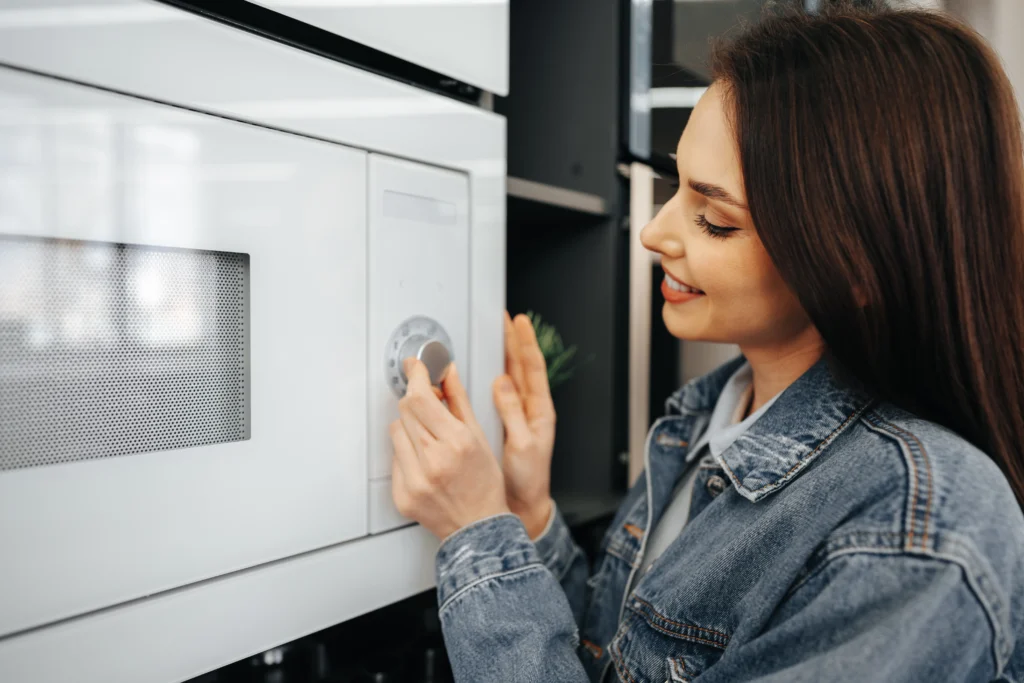
5 Reasons Microwave Inverter Technology is the Key to Perfectly Cooked Meals
While regular microwaves are nothing more than “reheating boxes”, a Microwave Inverter is a precision cooking tool. Revolutionizing how you use your kitchen, this tech now has five big advantages that get a help from staying away from the old transformer-based systems.
1. Precision Defrosting (Say Goodbye to Grey Edges)
We’ve all been there: thawing a steak then discovering the edges are already grey and “cooked,” while the center is still a frozen brick. In traditional microwaves, the defrost cycle pounds the outside too hard. A Microwave Inverter uses continous low-intensity heat to defrost food from the outside in. This helps keep your meat raw and fresh, ready for the grill or pan without any premature “microwave cooking.”
2. Gourmet Results for Delicate Ingredients
Delicate tasks such as melting chocolate, softening butter or proofing yeast typically require a double boiler on the stove. Traditional microwaves scorch these ingredients in seconds. You can thus melt the most delicate ingredients without any burning at all, since a Microwave Inverter can hold an actual “simmer” temperature. It offers the kind of skillful control you would find at a gourmet restaurant, for an appliance that has been restricted to popcorn.
3. Retention of Nutrients and Flavor
The nemesis of nutrition is excess heat. When a traditional microwave “pulses” full power, the extreme hot spots destroy vitamins and break down your food’s molecular structure, resulting in bland, rubbery taste. The Inverter’s consistent energy also maintains moisture, texture, and nutrients to keep your vegetables crunchy and protein juicy.
4. Energy Efficiency: Keeping Your 2026 Utility Bills Low
Energy efficiency has moved on in 2026 and it’s no longer a trend, but a must. Regular transformers are energy-inefficient because they continuously “surge” for power. A Microwave Inverter however, is significantly more energy efficient as it transfers the electrical energy into cooking power with minimum waste. Using this power intelligently promotes lower monthly utility costs and is more sustainable.
5. Lightweight and Compact Engineering
Old microwave Inverter have these huge copper transformers that are super heavy and take up a lot of internal space. By swapping out that “dead weight” for a small and sleek inverter circuit board, manufacturers can design machines that end up weighing much less. More importantly, this internal cooking capability provides a larger capacity with an external footprint that lets you cook more plated meals without taking over your entire kitchen counter.
Also Read Best Trends to Level Up Your Setup in 2026
Buying Guide: 2026 Inverter Microwave Features
Wading through an appliance aisle can be complicated, in part because there are so many “smart” monikers being thrown around. When you’re ready to upgrade, you should not just purchase the first shiny box you come across. Come 2026, the challenge is to discover a machine that walks the line between technical precision and everyday functionality. Ways to make sure you are getting a long-lasting genuine Microwave Inverter
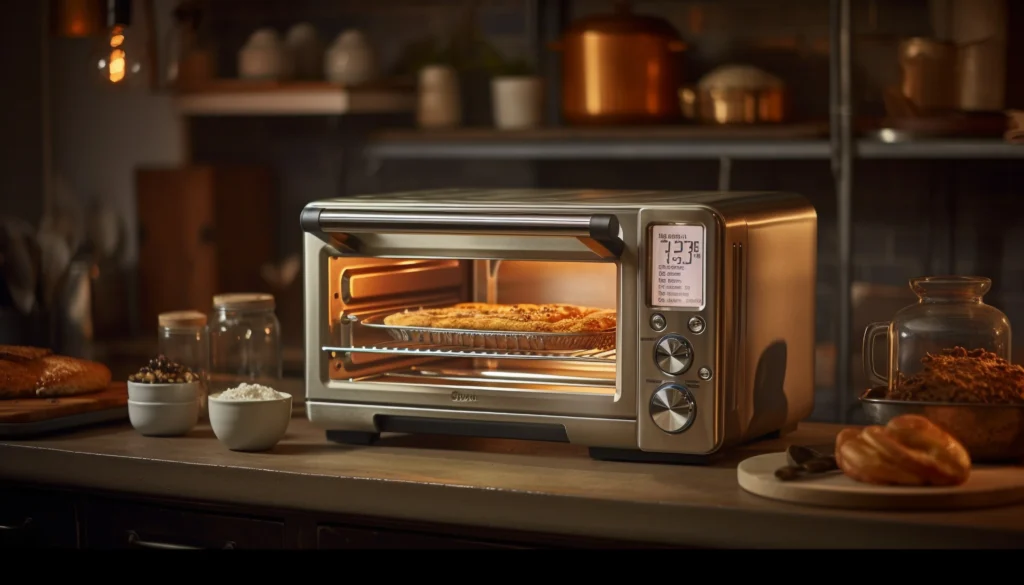
Identifying Genuine Inverter Technology
Not every microwave which advertises itself as “cooking evenly” is actually a true inverter. Good marketing hides the old transformer tech of traditional manufacturers. To spot the real deal, search for the official “Inverter” logo — typically located on the glass door’s bottom corner or control panel.
High-end brands such as Panasonic (who invented this technology), LG (the Smart Inverter line) and Samsung are the gold standard. When you go browsing, keep an eye out for terms like “Linear Power Delivery” or “Cyclonic Inverter” in the specifications. If it has a “Heavy Duty Transformer” on the box, avoid it—that’s what you are trying to get away from, old 1940s technology!
The Care of Space: Why Internal Capacity Is a Timely Topic
One of the behind-the-scenes engine advantages of 2026 models is space optimization. Previously, if you wanted a big 2.2 cubic foot microwave, it needed to be a massive “counter-hog,” due to the size of the internal magnets that Mightiest have required.
Allows instead of the Transformers, Microwave Inverter circuit board is approximately 25%-smaller and much-thinner than an old transformer. When you go shopping, take the measurements of your biggest dinner plate with you. You will also be surprised to know that a “Compact” inverter model can often accomodate larger plates than any other “Mid-size” conventional models. It gives you more space to cook while freeing up valuable counter space for your coffee station or air fryer.
FAQs about microwave inverter
Are inverter microwaves more costly to repair?
The technology is more advanced, but it’s not particularly lousy. Because there are no heavy moving parts or high-voltage transformers that run toasty hot, the insides tend to last much longer. But if it needs repair, it’s typically just a matter of swapping a circuit board, something that’s second nature to modern-day techs.
Do I require special “Inverter-Safe” containers?
Not at all. You can keep using all your old microwave-safe glass, ceramic and high-quality plastic containers. The Microwave Inverter still employs the same microwave frequencies, it just controls the rate at which these waves flow.
Inverter Microwaves: Why does it sound different?
An inverter model, for example, might be far quieter. An old-style microwave has a “hum” with its “click-click” as the transformer adds and removes power. Because the inverter delivers a smooth, constant flow of power, that sound is much more steady and gentle whirring.
Does it actually cook faster?
In many cases, yes. Since it doesn’t waste time cycling “off” every few seconds, the total energy transferred to the food is more efficient. That can reduce cooking and defrosting times by as much as 10% to 15% over old-school models.
Can I still use for basic tasks, like making popcorn?
Absolutely. It does all the basics perfectly well, but it really shines when you give it something tough to do, like melting butter or reheating a dainty plate of pasta without turning it into a dry ball.
Read about 5 Best Autonomous
Conclusion: Are The Inverter Upgrades Really Worth It?
After examining the science, the engineering, and the outcomes in practice, it is indisputable: the conventional transformer microwave is an outdated artifact. If you’re tired of chomping into “lava-hot” edges and frozen middles, then a microwave inverter isn’t just a luxury — it’s a must-have in today’s kitchen. “nuked” food in 2026 for when precision technology exists.
Microwave inverters are slightly more expensive than a basic budget model at the outset, but the long-term benefits to your wallet after purchase far exceed the higher price point. You are buying better food quality, reduced energy bills and a more multipurpose appliance capable of everything from an elaborate reheat to gossamer gourmet melting.
H3: Who Would Need an Microwave Inverter?
This tech is specifically for:
- The Culinary Perfectionist: If you care about the texture and taste of your meals at all, microwave inverter is the only way to go since it doesn’t create “hot spots that ruin food.
- Busy Families: If you are someone who relies on frequent defrosting, this slot-tech will prevent everything from half-cooked, half-frozen meat.
- The Nutrition Conscious: If you want to preserve the most possible vitamins and minerals in your vegetables, microwaves with inverter heating are better than the “brute force” method of old transformers.
The Upshot: The transition is well worth it if you eat at all and care about how your kitchen runs. It’s time to stop “nuking” your dinner and start cooking it with the precision that it deserves.