
Introduction
The experience of living in an apartment in 2026 is a challenge all on its own. This is a dilemma that most renters encounter at some point: You want the luxury of a home from the future, but you can’t drill holes in things, rewire the walls or alter faucets. For years, “Smart Homes” literally meant pricy, permanent construction.
However, the landscape has shifted. Today temporary smart solutions are the urban living standard. Whether you are in a cozy studio or a high-rise flat, though, you can now enjoy all the comforts of a fully automated lifestyle that moves with you when your lease is up. So to help you out, we’ve put together this practical guide with 10 devices you can use that will provide maximum impact with zero permanent damage.
Why Smart Tech is a Small Space Game-Changer
In a small square-footage environment, efficiency is key. Smart technology in 2026 isn’t a “look what I can do” scenario; it’s solving small-space problems. From auto-dimming lights that create a “theater feel” in a one-room apartment to smart sensors that manage your climate while you’re out of the house, these gadgets help maximize your comfort. By automating repetitive tasks you translate a small apartment into a larger, more organized and more premium experience.
The Renter’s Rule: Look for “Plug-and-Play” Gadgets
The first rule of smart apartment living is reversibility. If a device needs a professional electrician or requires a drill that makes notches in the wall, it’s probably not for you. Giga/Swash, Aegis and Graviton are all preparing for the 2026 iteration of the “Plug-and-Play” revolution: devices with adhesive strips, battery power or plain sockets. This guide prioritizes gadgets you can install in five minutes and uninstall even faster, so that all of your security deposit comes back and you get to enjoy the best this side of the 21st century has to offer.
10 Best Satisfying Bedroom Gadgets
Out of the Box Smart Security Solutions (No Drilling Necessary)
Security is paramount to any resident, but those who live in apartment structures frequently contend with stringent “no-alteration” policies. Fortunately, the smart home industry has mastered drilling-free security hardware by 2026. These devices offer peace of mind as well as high-tech protection, all while being completely portable and easy to take down once you leave.
1. Smart Video Doorbells (Battery Powered)
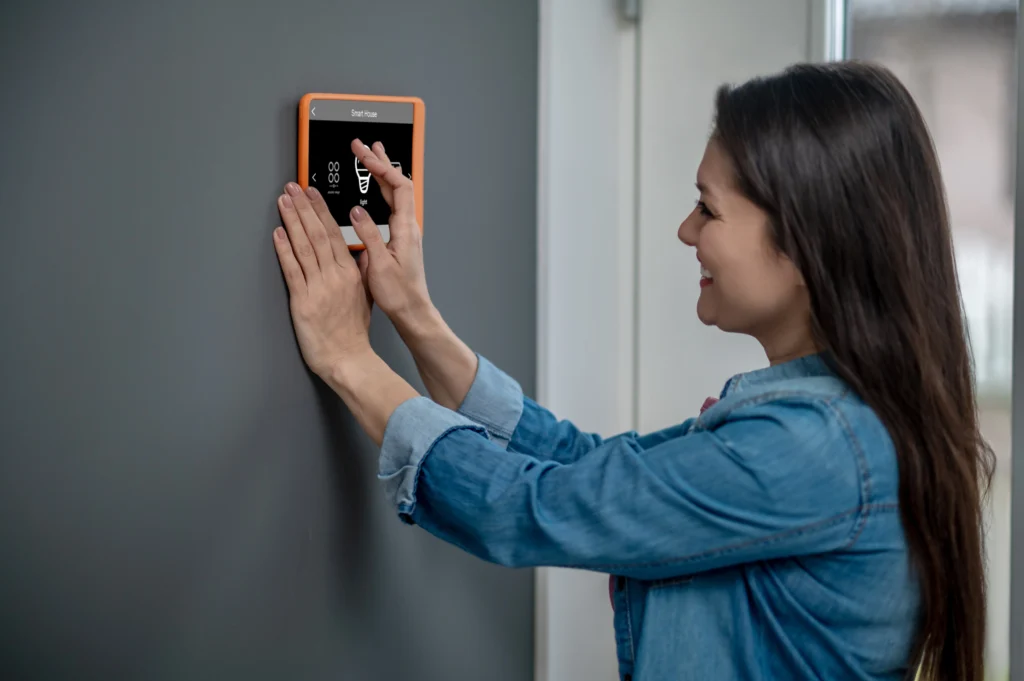
Video doorbells used to be difficult and messy — with wiring and drilling into the door frame. Now battery-powered models are the smart home solution of last resort for renters. They can be mounted via high-strength, weather-resistant adhesive brackets, or “over-the-door” mounts that slide over your door’s edge. They are able to dispenses with 2K resolution and two-way audio, so you can talk to delivery drivers or scare off intruders straight from your phone without leaving a single impression on the hotel’s exterior.
2. Portable Indoor Security Cameras with AI Tracking
Portable indoor cameras are critical if you would like to monitor your pets or anything in the home. Unlike older models that had to be bolted up onto the ceiling, 2026’s best smart home cameras are sleek, freestanding machines that sit atop any shelf or bookshelf. These cameras feature advanced AI tracking and even know to differentiate between a human and the family pet, providing you with instant alerts when something’s not right. The best part is they just plug into a standard wall outlet, making ’em 100% renter-friendly.
3. Smart Locks Retrofit: No need to change the keys and still secure
Landlords typically prohibit residents from changing the physical locks on their doors. The “retrofit” technology does just that by attaching to the interior of your existing deadbolt. You retain your original keys and the exterior of the door looks exactly the same, yet you get all the smart-home benefits. You can unlock your door via Bluetooth, send digital “guest keys” to friends, and even have the door lock automatically behind you — all without so much as touching a drill or a screwdriver.
Lighting and Ambience: Creating the Perfect Mood
The best way to alter the “vibe” of a small apartment without purchasing new furniture, is lighting. A carefully organized smart home lighting design can help make a small studio feel airy and bright during the day, but cozy and intimate at night. The best part for renters? Many of these solutions either replace your existing bulbs or attach to surfaces via adhesive, so they’re the ultimate in space-saving upgrades.
4. Smart LED Bulbs & Strips: Change Colors with a Click
One of the easiest ways to step into the smart home is with a smart bulb. By replacing your standard “yellow” bulbs with Wi-Fi-enabled LED versions, you’re able to control millions of colors and dimming levels. You can stick LED light strips behind the TV or under kitchen cabinets, creating high-end “accent lighting” if you need it — for apartments, this is a game changer. Now, these strips are thinner and brighter than ever, letting you hide them in narrow gaps to make your apartment look like a high-end hotel — in 2026.
5. Motion-Sensing Night Lights for Hallways
In smaller apartments, kicking around a dark kitchen searching for a light switch can be daft. The best smart home upgrade: battery-operated, motion-sensing night lights These little gadgets can be attached to the baseboards of your hallway or bathroom with 3M command strips. They switch on only to movement, ushering you with a soft and subtle light that won’t rouse you into consciousness or require permanent electrical work.
6. Smart Curtains & Blinds for Natural Light Control
Sunlight is a scarcity in urban apartments. The smart curtain robots are “retrofit” devices that hook onto your existing curtain rod or track. They convert your ordinary curtains into a smart home feature that opens at sunrise, closes at sunset. This automatic system also helps you keep your sleep cycle in check, while giving you an added layer of privacy and thermal protection — meaning that your apartment remains cool in the summer and warm in the winter with absolutely no effort from your end.
Smart Gadgets to Control Climate and Energy Use
The utility bill is one of the biggest hidden costs of living in an apartment, particularly in older buildings with inefficient cooling. Converting your space into a smart home doesn’t just create convenience; it is a strategic maneuver to reduce your energy consumption in 2026. These devices enable you to manage your environment more accurately, ensuring you’re only paying for what you use.
7. Smart Thermostats for Window A/Cs
Many don’t even allow you to change the central thermostat, and many have window or portable AC units. Smart AC controllers serve as a smart home bridge in 2026. These devices use infrared technology to communicate with your “dumb” AC unit, enabling you to set schedules, adjust the temperature via cellphone and even switch off the cooling using geofencing when you aren’t in the apartment. It’s the simplest way to achieve central-air comfort on a renter’s budget.
8. Smart Plugs: Making a Dumb Appliance Smart
If you own a floor lamp, a coffee maker or even a fan that won’t connect to Wi-Fi natively, then the smart plug will become your best friend. These small adapters are the foundation of any smart home ecosystem. If you plug your appliance into a smart plug, you’ll be able to monitor how much energy it’s drawing in real-time and set “auto-off” timers. It stops “vampire power” suck from electronics that remain plugged in, letting you save a sizable amount on your monthly utility bill.
9. Urban Living Air Quality Monitors
By 2026, city-dwelling apartment dwellers are even more alarmed at pollutants indoors and CO2 levels. A specialized air quality monitor is a super-easy smart home sensor that measures dust, allergens, and humidity. You can then link these devices to your smart air purifier, so that the second the air quality starts to deteriorate in your home — maybe while you’re cooking or due to smog in a city — your air purifier automatically turns on. It’s a health investment that requires zero installation, other than plugging it into a wall.
The Brain Behind it All: Your Apartment Command Center
Controlling ten separate gadgets through ten disparate apps is not a smart home — it’s a headache. To take advantage of the automation in a small apartment, you need some sort of central “brain” to daisy chain everything together. By 2026, central hub no longer means speaker; it’s now your visual and command center to all those scattered pack mates in each corner of your home as you tighten up everything into one interface.
10. Smart Displays All-in-One (Google Nest vs. Amazon Echo 2026)
A high-quality smart display should be the heart of your smart home. The showdown between the Google Nest Hub and Amazon Echo Show reaches a perfect pitch in 2026. These displays serve as a digital dashboard for your apartment. You can view your video doorbell feed, adjust your bedroom lighting or check your air quality monitor with just a tap or voice command. These are great for apartment dwellers because they sit on a counter or nightstand, need zero mounting and make it easy for everyone in the home to control the tech.
Enhanced Compatibility With Matter, Both Devices Speak One Language
If you’re planning a smart home for the future and want it to be “future-proof” you need to look out for the “Matter” logo on every device you purchase. Matter is the new universal language that lets disparate brands communicate with each other. Previously, you had to worry about whether or not a lightbulb was compatible with “Hey Google” or “Alexa.” Matter-compatible devices will work across all platforms in 2026. This is particularly important for renters, who may initially install one system but then move to an apartment that prefers another. Matter future-proofs your smart technology investments, so they can continue working and connecting regardless of the ecosystem you choose.
FAQs – Smart Home Devices for Apartments/Flat
Does setting up a smart home violate my rental agreement?
n 99% of cases, no. So long as you stick to “plug-and-play” or adhesive-based devices, which do not involve drilling into walls or changing electrical wiring, you would not be violating standard lease terms. Always favor gadgets that are described as “renter friendly” or “non-permanent.”
Do I need fast internet for all these devices?
Yes. A Wi-Fi connection is the backbone of a stable smart home ecosystem. Since gadgets such as security cameras and smart displays stream data, we recommend at least a 100 Mbps connection to make sure your devices respond in a flash instead of after an awkward pause.
What will happen to my smart home setup if I move?
That is the magic of the 2026 apartment guide! Because our focus was portable devices, you’d just unplug from your hub, pull off the adhesive-backed sensors and throw `em in a box. When you get to your new place, you just plug them in, and your settings will be exactly the same.
Can my landlord “hack” into my smart home devices?
Security is a valid concern. Be sure to enable two-factor authentication (2FA) on your smart home apps to block unwanted access. You can feel secure that your data and camera feeds remain private to you, as long as you’re only accessing it from your own private Wi-Fi network (not the building’s “guest Wi-Fi”.
How much does it cost to set up a smart home in 2026?
Not at all. You don’t need to purchase all 10 of the devices at once. You could begin with a basic smart bulb or a smart plug for less than $20. The most cost-effective method is building your ecosystem gradually, in which you add one new device only monthly.
Final Verdict: How to Build Your Smart Apartment on a Budget
In 2026, making a rental a fully functioning smart home isn’t some faraway pipe dream for only homeowners and those with endless deep pockets. The beauty of modern technology is that it is modular. You don’t need to pay thousands of dollars upfront to have a connected lifestyle. The best (and cheapest) way to build your ecosystem is to find pain points — those daily tasks that make you angrier than they probably should and one device at a time solve them.
Here is a step-by-step implementation to stay on budget:
- Month 1: Start with the Brain (A Smart Display or Hub)
- Month 2: Atmosphere (Smart bulbs and plugs for high-use areas)
- Month 3: Add “Security” (A battery-powered Doorbell or Indoor camera).
A high-end smart home experience, without the financial pinch — and all 100 percent portable for your next move.
Best Overall Apartment Owner for Beginners
When in doubt, and if you are truly just closing the tunnel fillers with no clue, our #1 recommendation is the Smart Plug. It is the cheapest entry point into the smart home. For the price of less than a takeout meal, a smart plug lets you have some automation taste by being able to schedule your old lamps or coffee makers — without any technical stuff needed. Once you get used to having your morning coffee scheduled from your phone, you’ll realize why this is a switch that millions of apartment dwellers are making in 2026.