
Aurora hunters are calling 2026 the “Golden Year.” For the first time, a great celestial event is occurring alongside a revolution in consumer technology. If Northern Lights 2026 await you, then the best smart gadgets and AI cameras for shooting them are now more necessity than luxury — they can mean the difference between a hazy green smear and a work of gallery-worthy art.
Astrophotography of the 2026 Solar Maximum: Once in a Decade
We are about to pass through a rare astronomical window. The Sun cycles through peak activity every 11 years, and 2026 is officially in the middle of this “Solar Maximum.” For photographers (and all of us who enjoy the light show), this means increased frequency and intensity of Northern Lights, visible at latitudes where they hardly ever appear.
What is Solar Cycle 25 And the Aurora Peak
The Sun goes through a cyclic pattern of magnetic activity called Solar Cycle. Now we are in Solar Cycle 25, and it has already surpassed every scientific prediction for activity (the previous cycle was Ho Hum at best).
In 2026, the Sun’s magnetic field will be at its most chaotic state. This instability produces giant Coronal Mass Ejections (CMEs)—vast plumes of solar plasma that speed toward Earth. When these particles collide into our atmosphere, they produce the Aurora Borealis. Since 2026 marks the “peak,” the auroral oval (the region where lights are visible) will greatly expand, frequently driving the lights farther south into Europe and America.
2026 low-light capture technology is a total game-changer
If you attempted to photograph the aurora during the last solar maximum in 2014, chances are you were faced with “grainy,” long wait times of half a minute that smeared sharp “curtains” of light into a green haze.
2026 technology changes everything. The AI cameras are working with “Neural Processors” and they enable run-time noise reduction. In Stacked CMOS technology digital sensors used in modern days, reading light data is much faster and you can click a crisp image with a time duration of 1–2 secs. Better yet: Smart gadgets can now include artificial-intelligence-driven forecasting apps that pull real-time satellite data so you know the exact hour to step outside and avoid freezing in the dark for hours.
Top Picks for 2026: Beyond Iceland and Other Out-of-the-Ordinary Latitudes
The old “Aurora Belt” is still the Chosen Place, but the 2026 Solar Maximum will expand the field:
- The Classics: Tromsø (Norway), Abisko (Sweden) and Fairbanks (Alaska) will still be the “Big Three,” with close to 100 percent sighting probability, as long as you have clear nights.
- 2026 Superstars: Iceland, the 2026 hot spot — specifically Jökulsárlón Glacier Lagoon where the intense displays for 2026 will mirror off the icebergs.
- Unexpected Latitudes: Because Solar Cycle 25 is supercharged, don’t put your smart gadgets down even if your location falls in the Northern UK, Southern Canada or Northern US (think Michigan or Washington). We can also expect numerous “Storm Level” auroras in these areas throughout the year.
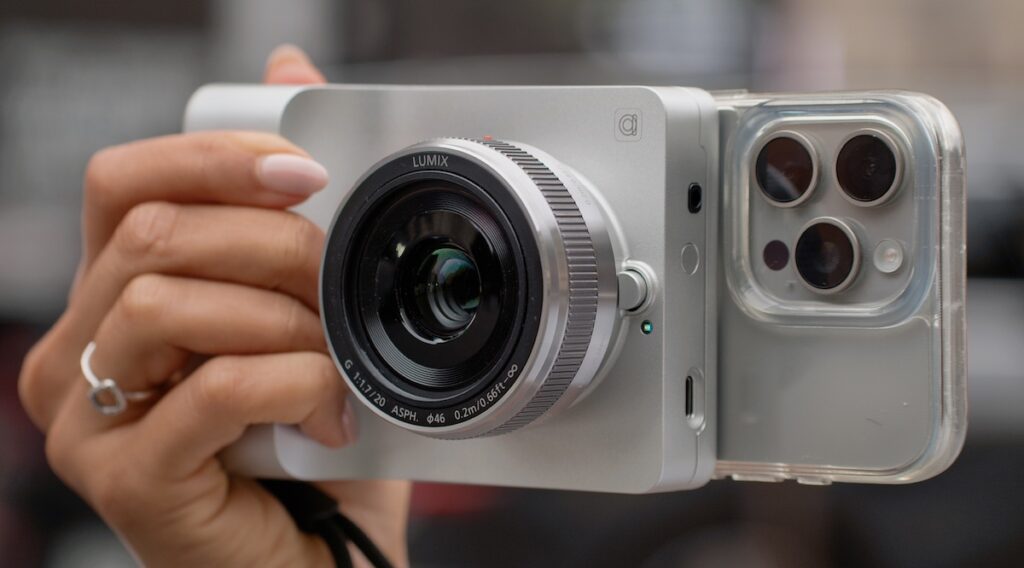
Neural AI cameras: Unveiling the Dark with Analytical Precision.
In 2026, the line between professional photography and simplistic “point-and-shoot” ease has been blurred with integrated dedicated AI chips built directly into camera bodies. These are not just optical devices anymore, they’re powerful computers that see better in the dark than a human eye.
Titanium Titans: Sony A7S III vs Nikon Z8 in 2026
Despite the arrival of lots of new models since we reached out, it was clear that these two are still the gold standards for 2026 Solar Maximum.
- Sony A7S III — Now this on the legendary 12.1MP full-frame camera Though 12MP may sound limited, in 2026 that’s its biggest advantage for Northern Lights. Bigger pixels offer greater light-gathering surface area. Its Dual Native ISO (the second base is at ISO 16,000) makes it the “low-light king,” allowing photographers to shoot the aurora with nearly zero noise.
- Nikon Z8: Get the Z8 when detail really matters. Its 45.7MP stacked sensor records the intricate “filaments” and “fringes” of auroras that lower resolution cameras would miss; in 2026, its specialized “Starlight View” mode brightens the electronic viewfinder to $-9\text{EV}$, basically letting you compose your shot in total darkness where any other camera is showing only a black rectangle.
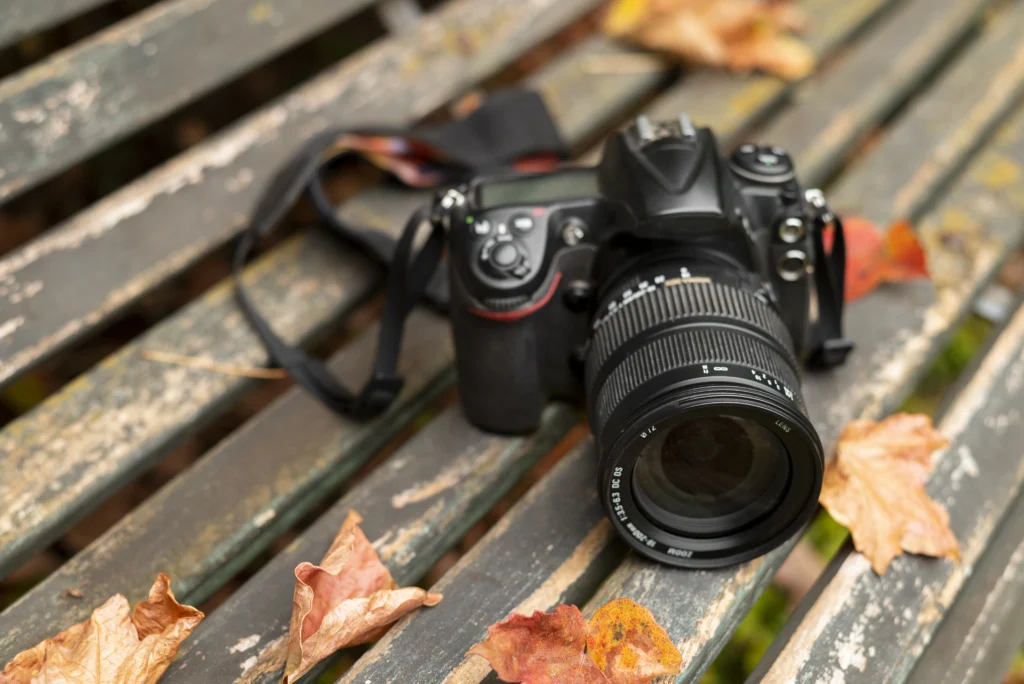
Canon’s Technological Leap: The EOS R3 Eye-Control Focus in the Dark
Canon has fundamentally changed our relationship with gear in extreme conditions. Eye-Control AF, first seen on the Canon EOS R3, has 2026-dated refinement that allows it to work even in pitch black.
As an example: Picture yourself in the icy Arctic; rather than struggle with buttons through bulky gloves, you look at a star or a particular area of the aurora you want through the viewfinder, and the camera focuses instantly. The R3 resolves even the faint-in-2026-feather-thin-igraterarolar curtains are sharp to ensure it has $7.5\text{EV}$ at instant – class in instant voltage light sensitivity
The Style Transfer: AI Noise Reduction and Real-Time Image Сynthesis
By 2026, the highlight of AI cameras is that they can internally neural-network-process images.
AI Noise Reduction: More modern cameras now utilize “Deep Learning” to differentiate between real stars and digital “noise” (grain). They can “clean” the sky intelligently while keeping the sharpness of the landscape.
Real Time Composite: Most smart devices and cameras have similar option like “Live Composite”. The camera captures a series of short exposures and combines them on-the-fly. You can watch the Northern Lights grow on your display, and guarantee that the sky doesn’t go overexposed while the foreground remains bright.
High-ISO Performance — ISO 102,400 with Low Grain
In years past, to shoot at ISO 6,400 was risky. By 2026, the latest smart gadgets and AI cameras take low-light photography further to ISO 102,400.
Due to the high speed of lights in 2026 Maximum, you have to use a fast shutter speed (e.g. $1/2$ second) so that aurora does not seem like blurry green cloud The high-ISO performance lets you keep that shutter speed quick without sacrificing brightness. With BSI and AI processing that’s what an ISO 102,400 image looks like today so it’s actually cleaner than a decade-old ISO 3,200 shot.
The Most Important Smart Gadgets for a Modern Aurora Hunter
Like twice before, in the year 2026 technology has solved the three biggest enemies to aurora photography: star blurring, gear freezing and finally physical exhaustion. They serve as your in-field digital assistant.
Smart Star Trackers to Avoid Deep Sky Auroras/Star Trail
If you are photographing the Aurora, usually you want your background stars to be pin-sharp. But Earth’s spin makes stars “trail” at long exposure times.
- The AI Advantage: Trackers like the Benro Polaris now use AI-driven Plate Solving to automatically align with the North Star.
- Precision: By wheelspinning against the spin of the planet, these devices let you have 2-minute exposures of just shimmer dots while AI cameras suck in faint deep-purples of the aurora zeniths in ‘26
Auto Level & Tracking AI System Tripods
Trying to get a tripod set up on top of uneven snow or ice in the dark?
- Self-Leveling: Such as the motorized legs of the Edelkrone Tripod X, which level the camera in seconds at the tap of a smartphone button.
- Smart Tracking: Starting in 2026, many high-end tripods work with your phone’s GPS to “chase” the auroral oval as predicted movement, so that your camera is always aimed where there’s a max probability of light activity.
LensHeaters: Banish the Arctic Freeze — And Condensation
Arctic moisture can freeze onto your lens glass within minutes, ruining an entire night of attempts.
- Intelligent Temperature Control: Older heat strips only “on” and off, smart eye warmers register the “dew point,” such as Vixen 360III.
- Power Efficiency: They only use enough heat to maintain the glass just above freezing. This reduces “heat haze” distortion of your image and preserves precious battery life for your AI cameras.
Wearable Tech: Smartphone-Controlled Heated Clothes
There is no way you can take good photos with cold shaky hands. An even hotter trend in Smart Wearables must be that of 2026 that were designed just for photographers.
- App-Controlled Warmth: Venture Heat and Volt offer jackets and gloves with carbon-fiber heating elements.
- Timing in High Precision: You program “boost” modes through a Bluetooth app on your phone for when you are standing still during a 10-minute aurora show — and “eco” modes for traipsing over to the next viewing area. Here are the best smart gadgets to keep you in the field longer than all other players.
Capture 2026 Using Auroras on Smartphone : How does something like this work?
By 2026, the question isn’t whether a smartphone can do justice to the Northern Lights, but how well it stacks up against pro rigs. With neural processing, even the top smart gadgets on AI camera for Northern Lights 2026 can include that device already in your pocket.
Computational Photography in Action: iPhone 17 and Samsung S26 Mimicking Long Exposure
Multi-Frame Fusion in the iPhone 17 Pro and S26 Ultra revolutionizes low light photography.
- iPhone 17 Pro: taps its 48MP main sensor to capture a burst of short exposures (up to 30 seconds in Night Mode) and uses the A19 chip to stack them in real time. This eliminates the “noise” while preserving detail in the aurora.
- Samsung S26 Ultra: A 200MP sensor integrates DRAM (ISOCELL 3LD) directly inside the sensor. This allows the device to capture light data nearly instantaneously, which helps prevent what’s called “wobble,” common in handheld night shots.
H3: Specialty Apps: Control Manual Shutter Settings via Mobile Astrophotography
Standard camera apps tend to overprocess images to the point that the sky looks unnatural. At the top of 2026, pro-level applications are must-have:
- NightCap Camera: Unlocks an “ISO Boost” feature (4x sensitivity above what the native app can access).
- DeepSky Camera: With this app, Android users can finally shoot in raw (DNG) format; this is very important for 2026 because an image in it gives you the possibility to post-process your mobile shots as if they were DSLR.
Head Lines: External Mobile Lenses − Are They Really Useful for Low Light?
Secondly, the sensor in phones remains as good as it gets, but its size is an inherent flaw. In 2026, good “Clip-on” lenses are a hit e.g. Moment or Sandmarc lenses. But for Aurora photography, they are best used to increase field of view (for example: an 18mm Wide Lens) vs “brightness” The most accomplished foreshadowers of 2026 employ these to cram the gargantuan 2026 solar flares into a single image.
Optics of the Northern Lights: Best Lenses in 2026
If the camera is the pulse of your setup, then the lens is its eye. The only way to really unleash the power of these AI cameras is by providing glass that can deliver enough light for them to perform their sorcery.
The “Fast Glass” Rule — Why $f/1.4$ and $f/1.8$ are Non-Negotiable
The “fast” part means wide aperture (low f-number). The lights will speed across the sky during the 2026 Solar Maximum.
A lens at $f/1.4$ (for example the Sigma 14mm Art) collects quadruple the amount of light than a conventional $f/2.8$ lens.
This lets you use a shorter shutter speed to “freeze” the dancing curtains of the aurora, instead of allowing them to morph into a blurry green mist.
Go Wide or Ultra-Wide? Make the Focal Length Right
In 2026, the “Standard” for Aurora moved toward Ultra-Wide ($14\text{mm}$ to $20\text{mm}$)
- 14mm: For “Substorms” when the lights are way overhead (corona) and where you want to see all the sky.
- 24mm — Maximum goodness for “landscape-oriented” shots where you want to feature a cabin, mountain or someone in the foreground with the dancing lights behind them
In Extreme Cold, the Trade-offs of Prime Lenses for Zoom Lenses
The 2026 debate boils down to Image Quality vs. Versatility:
- Prime Lenses (Fixed Focal Length): Usually have bigger apertures ($f/1.4$) and fewer moving pieces. At $-30^\circ\text{C}$ temperatures they are less prone to mechanical failures, or “zoom creep” (when the lens slides out of focus).
- Zooms from $14 to 24\text{mm}$: More flexibility to re-compose your shot with minimal movement of the tripod in knee-deep snow. But they’re typically limited to $f/2.8$, which means you’re going to have to depend more on your camera’s AI noise reduction features to keep the image clean.
You can also check out our other AI Agents of 2026
Software and Post-Processing: The AI Darkroom
The post-processing stage has been revolutionized by neural networks in 2026. Recovering details from the gaping abyss of darkness used to be the domain of noise, something that rendered pixels useless with every incremental push toward the dark.
Adobe Lightroom Deploys Generative AI to Find Night Sky
Adobe Lightroom (2026 version) has integrated Generative AI specifically for astrophotographers.
- AI Denoise 2.0: This tool now supports ISO levels above 12,800 by removing luminance noise while preserving the fine details in aurora.
- Generative Remove: So if an unwanted satellite trail or a stray flashlight beam ruins your shot, Lightroom’s AI uses the surrounding stars and aurora gradients as guideposts to intelligently fill that space without a trace of what’s been edited away.
H3: DXO PureRAW 4: Gold Standard in DeepPRIME Noise Removal
While Lightroom excels in general edits, it’s DXO PureRAW 4 that’s the undisputed heavy-hitter for preparing RAW files.
- Neural Network DeepPRIME XD2: This is a ‘pre-processor’ to the engine. It corrects lens softness and removes “hot pixels” (those little colored dots that show up on long exposures when it’s cold), before you’ve even touched the image.
- The Result: Makes an image taken with a midrange camera seem like it was captured on the fanciest of AI cameras available in 2026.
Stacking Techniques — Use of Software to Combine 10+ Images for Zero Noise
You will have to do Image Stacking to get a N.G for an image.
- The Science: The act of stacking 10 identical photos — and software such as Sequator (Windows) or Starry Landscape Stacker (Mac) literally pulls it off by averaging each pixel.
- Zero noise: This process cancels out random digital noise and leave the static stars and landscape immaculate. It’s the secret weapon for 2026 photographers shooting in ultra-dark settings.
Smart Forecasting: Data-Driven Success
And the 2026 Solar Maximum is going to be wild. To get in the right place at the right time, you should take advantage of space-agency data to make your phone one of your favorite smart gadgets.
How the DSCOVR Satellite Data is used for Alerts in real-time
DSCOVR (Deep Space Climate Observatory) satellite location between the Sun and Earth Smart apps draw the “Real Time Solar Wind” data from this spacecraft in 2026.
- Lead Time: When DSCOVR senses an uptick in solar wind speed or a reversal of the Bz magnetic field (it must be “South” or negative), a heads-up appears on your phone or smartwatch.
- Accuracy: It provides you with a 15-to-45 minute heads-up before the aurora strikes the atmosphere, so that you can get your gear ready.
Cloud Holes in Remote Areas by AI Weather Modeling
The 2026 aurora can only be halted by clouds. New AI Weather foundation models (e.g., Microsoft’s “Aurora” model) deliver hyper-local cloud cover forecasts.
Micro-Forecasts: Unlike normal weather apps, these AI models can predict “micro-gaps” in the clouds (to a $0.25^\circ$ resolution). If it’s cloudy over your town, the app may show you a clear patch only 10 miles from you.
Top 5 Kp-Index and Solar Wind Density Tracking Apps
Keep these apps on your home screen to conquer the 2026 season:
- SpaceWeatherLive: The most detailed app available for solar flares and sunspot tracking.
- Hello Aurora: This is a community app where people will report real time live sightings.
- My Aurora Forecast Pro: Simple Kp-index alerts and Best Locations maps
- Aurora Alert Realtime: Professional camera networks make it possible to show you what the sky looks like right now in the Arctic.
- Windy. com: The go-to resource for tracking the satellite cloud layers, and finding clear skies.
Sub-Zero Environment Power Management
In 2026, we are past just “carrying extra batteries.” How Smart Gadgets 2026 Northern Lights February 2023 Work: High-capacity power solutions that can function down to -20^[circ] C.
Comparing Portable Smart Power Stations in the Arctic – Jackery vs EcoFlow
You’ll need a portable power station for long nights in the field. By 2026, the Jackery vs EcoFlow showdown has flipped to focus on cold-weather efficiency.
- Anker Solix C1000 Gen 2: The top unit of 2026 is $410 at Amazon, with frozen start capability and only losing about 35% capacity at $-10^\circ\text{F}$. Much better than most competitors.
- Jackery Explorer 1000 v2: Its only extremely rugged build but relies on insulation to avoid the standard 38% capacity loss seen in freezing weather.
- EcoFlow Delta 3 Series: The Delta 3 Plus is the fastest, charging from 0–100% in just 56 minutes. Its “X-Stream” technology enables you to rapidly recharge your gear in a warm vehicle between viewings.
Battery Insulation Tactics — Maintain Your Gear Warmth Between Shots
Lithium-ion batteries depend on chemical reactions that slow down in cold weather. To fight this:
- The “Body Heat” Rule: Always store spare batteries in an inner pocket near your skin.
- Insulated Pouches: Use Mylar-lined “Polar Mittens” or insulated camera cases.
- Chemical Warmers: A lot of 2026 photographers stick adhesive hand warmers right on the camera’s battery door for a functional temperature.
Power Delivery (PD) via USB-C and Direct Camera Power
USB-C PD is now supported on most modern AI cameras like the Nikon Z8 or Sony A7R V. That means instead of fumbling around with cold fingers trying to switch out batteries, you can just run a generally hardy, cold-rated USB-C cable from your power station directly to your camera. This gives you multiple hours of continuous “dummy battery” style power, essential for capturing long-duration solar storms in 2026.
Aurora Season 2026 Pro Tips
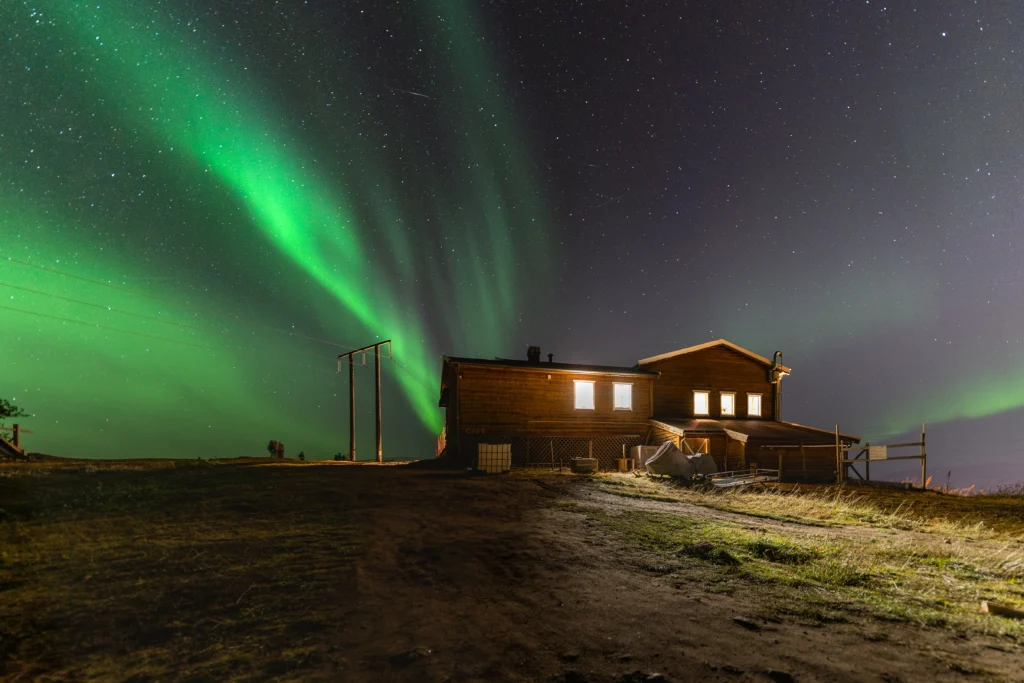
The “Secret” White Balance: Kelvin for More Natural Greens and Purples
So, Auto White Balance (AWB) is often disastrous during an aurora as it makes the sky look too heavy/ muddy.
- The Goldilocks Zone: 3500K to 4000K manual Kelvin camera setting.
- Why? It makes sure the deep blacks of the night sky remain “true” and that, say, vibrant neon greens (as well as rare 2026 purples) pop without appearing artificial.
Compositional Tricks: Using Reflective Ice and Water for Double the Aurora
To make your photos in that 2,500-word article pop, consider reflections.
- Black Sand Beaches In places like Iceland’s Reynisfjara, a thin film of retreating tide becomes a perfect mirror.
- Ice Bubbles: To shoot the frozen methane bubbles of Lake Abraham in Canada, Advanced Wide-Angle Lens capturing the reflection from aurora in the clear ice for a symmetrical composition.
How Do You Deal with Equipment Failure: Maintenance in Humid and Cold Areas
The single biggest killer of gear in 2026 isn’t cold — it’s the switch to warmth.
- The Ziploc Method: Stuff your camera into a big airtight bag before stepping into a warm car or hotel. The condensation will be on the outside of the bag rather than inside your lens elements.
- Silica Gel Packs Keep big packs of desiccant in your gear bag to suck up any leftover Arctic moisture.
- Tripod maintenance: Stay away from metal tripods if you can — they become kind of “brittle” or gum up on your skin at $-30^\circ\text{C}$.
FAQs about AI cameras
-
AI Cameras have become a necessity for the 2026 Sailors on the Sea of the Northern Lights?
Fast-moving, violent auroras from the 2026 Solar Maximum. Specialized neural engines built into the AI Cameras process all image data in real time, so you can shoot at high ISO settings without that annoying “grainy” noise to ensure those twinkling lights look clear and bright.
-
What Smart Gadgets will provide the most assistance in predicting Aurora?
he main smart gadgets used for forecasting are smartphones that use apps to track data from the DSCOVR satellite. The apps track density in the solar wind, and flips in its magnetic field to provide you with a 15–45 minute warning before lights arrive.
-
Can I use an iPhone or Samsung instead of professional AI Cameras?
Yes! Flagship smartphones in 2026 are powerful smart gadgets leveraging computational photography to emulate long exposures. They do have smaller sensors compared to the pro-level AI Cameras, but they are great for casual hunters that want quality photos worth posting.
-
What allows AI Cameras to survive the extreme Arctic cold?
The software is all “smart,” the hardware still need some help. Modern AI Cameras are weather-sealed for the most part, but it’d be good to match them with smart gadgets like USB powers lens heaters and insulated battery pouches- to prevent freezing/fogging up electronics.
-
What is the advantage of AI Noise Reduction in 2026 gear?
AI Cameras have embedded “Deep Learning” noise reduction. This lets you shoot at ISO 12,800 or higher, which is required for fast-moving auroras. The AI knows to separate out the star from digital “noise,” removing all the noise (blurring) while still keeping stars crisply sharp.
Making sure you will be ready for the Light Show of a Lifetime
Featuring an extraordinary showcase of cosmic fireworks that has been overdue since Solar Cycle 24, we are now near the peak of Solar Cycle 25. But 2026 is a unique intersection point between nature’s unfiltered strength and man’s creativity. Gearing up with top smart gadgets and AI cameras for Northern Lights 2026, means you are not only a spectator of aurorus magnificence but also its story teller, capturing the unseen details shimmering within the atmosphere.
The 2026 Solar Maximum is not just a photography opportunity; it is a reminder of our planet’s place in the solar system. Whether you’re on a frozen lake in Finland or a coastal cliff in Iceland, the proper tech guarantees that your attention can stay with the experience while your equipment manages the technical complexity of night.
Building Your 2026 Checklist
Make sure these essentials are in your kit for a successful expedition:
- AI-Primary Camera: High ISO body (such as Sony A7S III or Nikon Z8).
- Optics: At least one ultra-wide lens that has an aperture of $f/1.4$ or $f/1.8$.
- Smart Power: A cold-rated Portable Power Station and spare batteries all stored in insulated pouches.
- Stability: A Carbon Fiber Tripod with a reliable ball head.
- Forecasting Tools: A smartphone running DSCOVR data apps and A.I. weather predictors.
- Protection: Smart Lens Heaters to eliminate frost and airtight bags to control condensation.
- For Personal Comfort: App-controlled Heated Apparel – Maintain dexterity in sub-zero temps.
Conclusion on the Responsible Usage of AI in Astrophotography
Get ready for 2026, where AI-based synthesis and generative tools are making an important ethical discussion even more relevant. AI may be an important partner for reducing noise and stabilizing images, but the essence of astrophotography is authenticity.
Embellish, Don’t Invent: Use A.I. to show us what it real, the soft purples and sharp structural curtains that the human eye may not have seen. Do not use generative A.I. to “add” aurora borealis where none existed.
The Journey Still Matters: Technology should expedite the process, not eliminate the rush of the hunt. Meanwhile, anything that represents a real moment in time will be the most memorable from the 2026 Solar Maximum. It can be said, however, that such has been captured by a mix of patience and precision with modern assistance.
Get your gear ready, track the solar winds and prepare for 2026 — the light show of a lifetime is nearly upon us.